In the competitive landscape of food manufacturing and culinary arts, balancing high-quality flavor with strict budget constraints is a constant challenge. Yeast extracts have emerged as a powerhouse ingredient, offering a natural, clean-label solution to amplify savory notes without the high costs associated with premium meats or expensive chemical additives. This guide explores how you can strategically use yeast extracts to optimize your formulations for both taste and profit.
Yeast extract is a natural ingredient derived from the same yeast used to bake bread and brew beer. Through a process called autolysis, the yeast cells are broken down, releasing their internal contents—specifically proteins, amino acids, vitamins, and minerals. This concentrated essence is then dried into a powder or paste.
The primary reason yeast extract is so valuable in flavor development is its high concentration of glutamic acid and nucleotides (like IMP and GMP). These compounds are the building blocks of "umami," the fifth basic taste that provides a sense of meatiness, fullness, and savory depth. Unlike simple table salt, yeast extract interacts with your palate to linger longer and broaden the flavor profile of the entire dish.
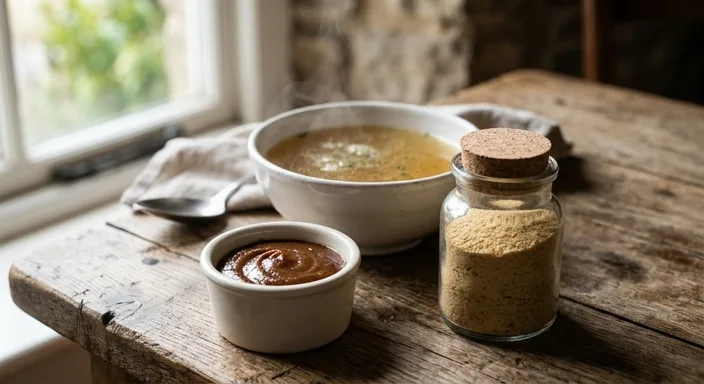
When evaluating ingredients for cost-effectiveness, it is vital to look beyond the "price per kilogram" and focus on the "cost per serving" or "impact per dose." Yeast extracts are incredibly potent; a usage level as low as 0.1% to 0.5% in a final product can transform the sensory experience.
One of the most effective ways to save money using yeast extract is by exploiting "umami synergy." Scientific research shows that when glutamates (found in yeast extract) are combined with specific nucleotides (IMP and GMP), the perceived intensity of umami flavor is not just added—it is multiplied.
This means that by using a specific type of yeast extract rich in nucleotides, you can achieve the same flavor impact with significantly less total material. For a developer, this synergy is the "holy grail" of cost-saving: achieving a 5x or 10x flavor boost while only slightly increasing the ingredient cost. This allows for a reduction in other expensive savory components while maintaining—or even improving—the taste profile.
Reducing sodium is a major goal for many food producers due to regulatory pressure and consumer demand. However, simply removing salt often results in a "flat" or "thin" taste. Yeast extract is a premier tool for sodium reduction because it mimics the flavor-enhancing properties of salt without the sodium content.
Furthermore, many producers looking to move away from Monosodium Glutamate (MSG) find yeast extract to be the perfect alternative. While MSG provides a sharp umami hit, yeast extract provides a more rounded, complex, and natural savory foundation. In many applications, yeast extract can facilitate a 30% reduction in salt while keeping the consumer's perception of "saltiness" and satisfaction levels intact.
Success with yeast extract depends on choosing the right variant for your specific needs. There are generally three categories to consider:
When formulating, always start at the lower end of the recommended dosage. Over-dosing yeast extract can lead to a "yeasty" or overly bitter aftertaste. The goal is to reach the "threshold of perception" where the yeast extract makes the dish better without the consumer being able to identify yeast as an independent ingredient.
Yeast extracts are versatile, but they provide the highest ROI in the following categories:
No. While yeast extract contains naturally occurring glutamates (the same source of umami as MSG), it is a complex food ingredient made of amino acids, vitamins, and minerals, whereas MSG is a pure sodium salt of glutamic acid. Yeast extract is considered a "natural flavor" or "yeast extract" on labels.
While results vary, many manufacturers see a reduction in total savory ingredient costs by 10-20% when they switch from expensive meat-based bouillons to a yeast-extract-optimized base, particularly when accounting for the lower dosage required.
Most yeast extracts are vegan as they are derived from fungi (yeast). Regarding gluten, most yeast extracts are gluten-free, but those derived from brewer's yeast (a byproduct of beer) must be verified for gluten content. Always check the supplier specification.
Yeast Extract Powder
View on AmazonDigital Kitchen Scale
View on AmazonShare this guide:
If you found this guide helpful, consider leaving a tip!